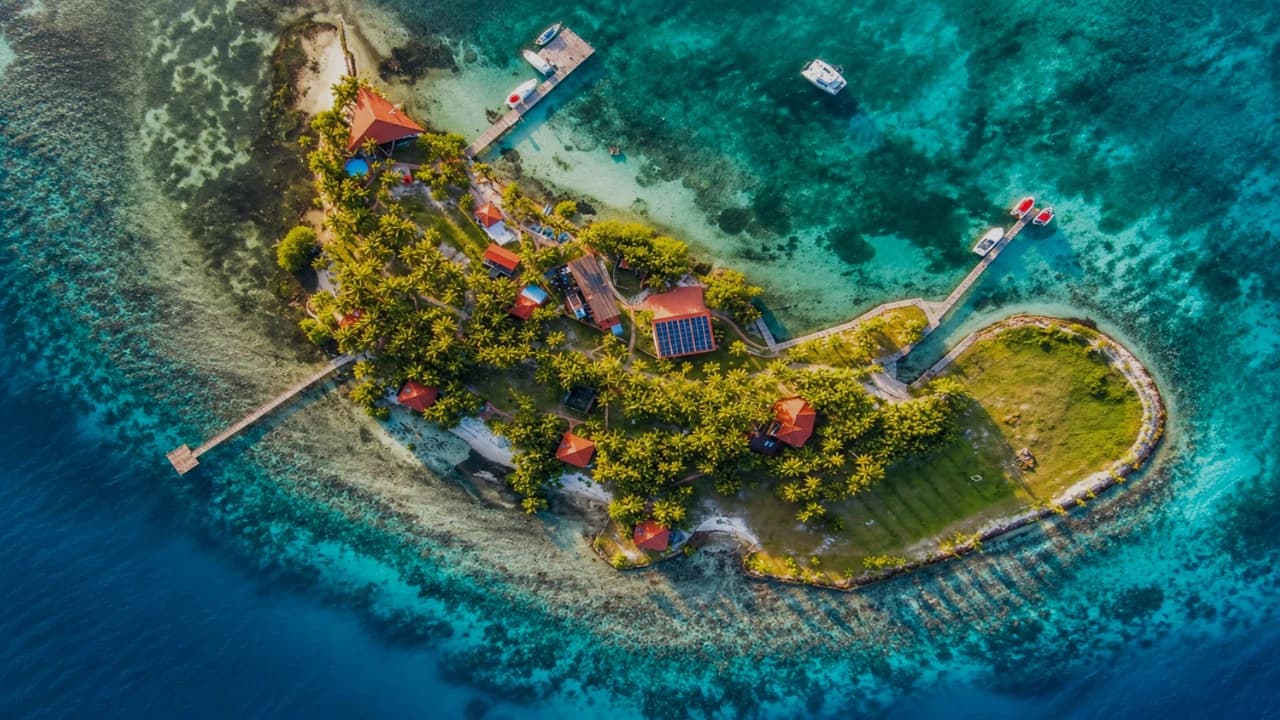
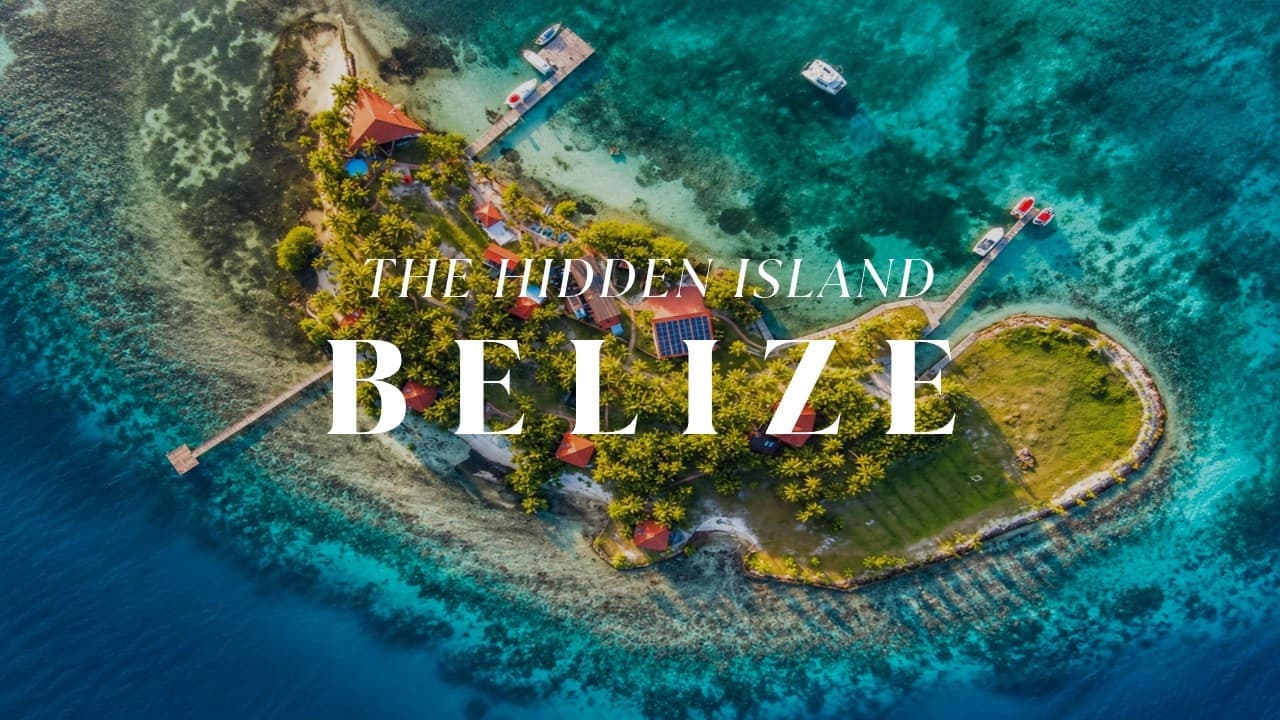
- Michael Beggs is developing Coconut Point, a waterfront community on a 220-acre inland island inside a lagoon sanctuary on the Belize coast.
- He says phase one is sold out, phase two is about 85 percent sold, and phase three will bring 61 more home sites to market.
- Entry-level lots in phase three should start around $92,000 to $93,000, with legal fees, closing costs and the 8 percent stamp duty included.
- Michael puts finished build costs at about $130 to $150 per square foot, and says a buyer in a hurry could go from design to move-in in about 12 months.
- He chose Belize for its English language, English-based legal system, freehold title and a currency pegged to the US dollar.
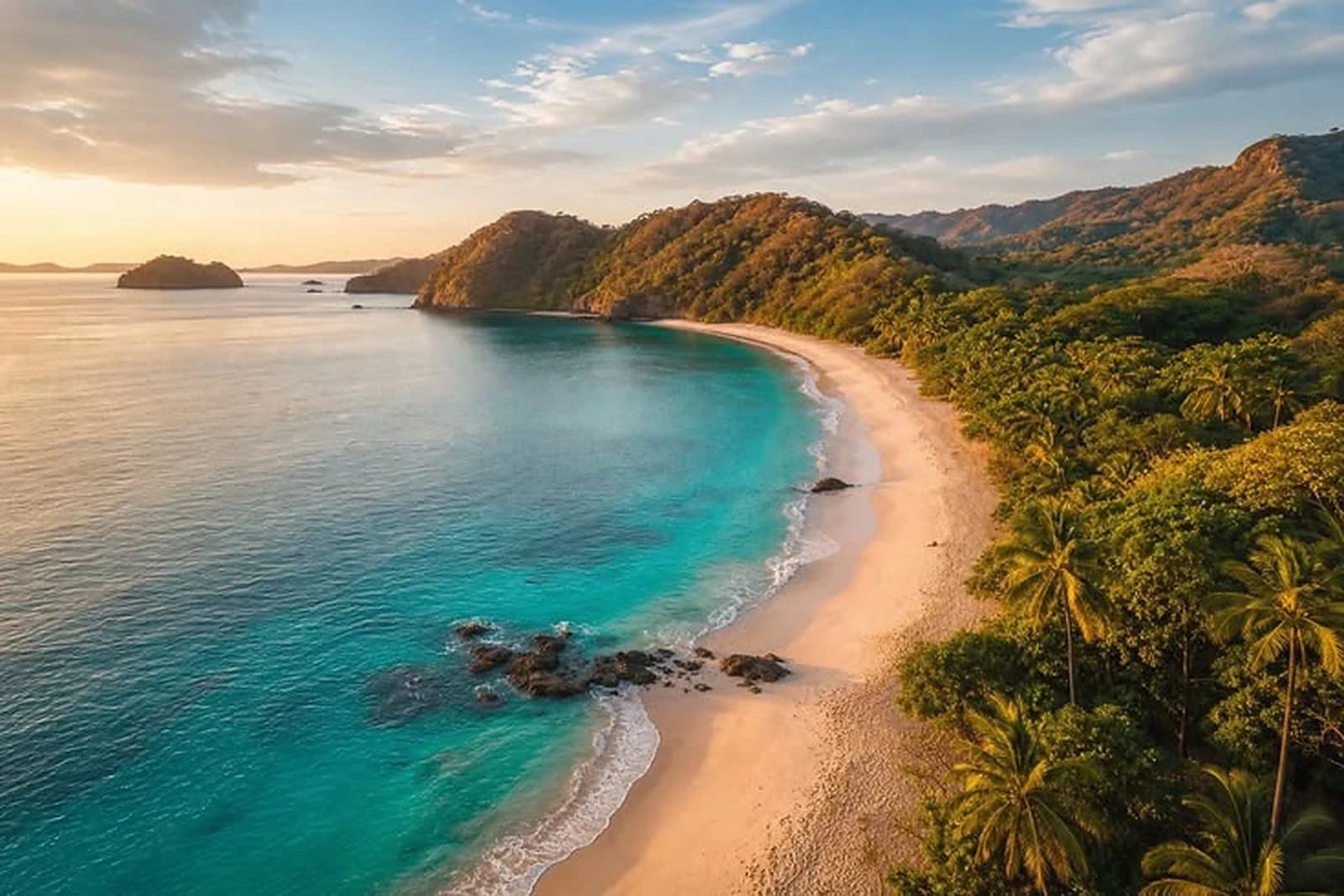
Some places are found on a map. Coconut Point was found with a machete and a boat. Developer Michael Beggs cut his way through overgrown land on the Belize coast, then went around by water and came upon a 1,000-foot beach on an island in a quiet lagoon.
That is the story Michael shared as the fifth guest on Owning Paradise: The People Behind The Places, Airdomo's interview series hosted by Stephanie Gilezan, Co-Founder and CEO of Airdomo. The series introduces buyers to the builders, brokers and developers shaping the destinations Airdomo represents. Watch the full episode below or on YouTube.
Who Is Michael Beggs And What Drew Him To Belize?
Michael has spent 35 years working around the world in development, development consulting and hospitality. He has lived in 16 countries on four continents, and he brings pieces of each of those experiences to his work in Belize.
He first arrived in 2002 or 2003 and built condo hotels in San Pedro. He left for a few years after the 2008 crash and came back in 2014. It was the first time he had ever returned to a country he had left.
"Belize was a place of opportunity for me. And I could see that it hadn't followed the traditional development routes of brand hotels, big scale development."
Fly Fishing And The British West Indies
Michael calls himself a fly fishing nut, and Belize is one of the top places in the world to fish for tarpon, bonefish and permit. When he looked for his next project, the fishing had to be part of it.
He also has a soft spot for the former British West Indies, countries that kept the English legal system and grew into independent nations. In Belize everyone speaks English and the law is based on English law, which he says makes business simpler. He is honest that Belize is not the easiest place to do business, but he calls it a fantastic foundation to work with.
The slower Caribbean pace frustrates him as a developer, and he takes those setbacks on so owners do not have to. For buyers, he says, that same pace is the point: you choose between the hammock, a book, snorkeling or fishing, and nobody bothers you.
How Did He Find An Island Nobody Knew Was There?
For years this stretch of coast, near the small village of Gales Point, was reached only by a poor dirt road that could not be driven in the rainy season. Few people went there, so few people were looking.
The land came to Michael through a favor. Years earlier he had stepped in to help a woman who was being taken for a few hundred thousand dollars, finding her attorneys and putting her on the right track. She never forgot. A few years later she told him her husband owned land in the middle of nowhere and did not know what to do with it.
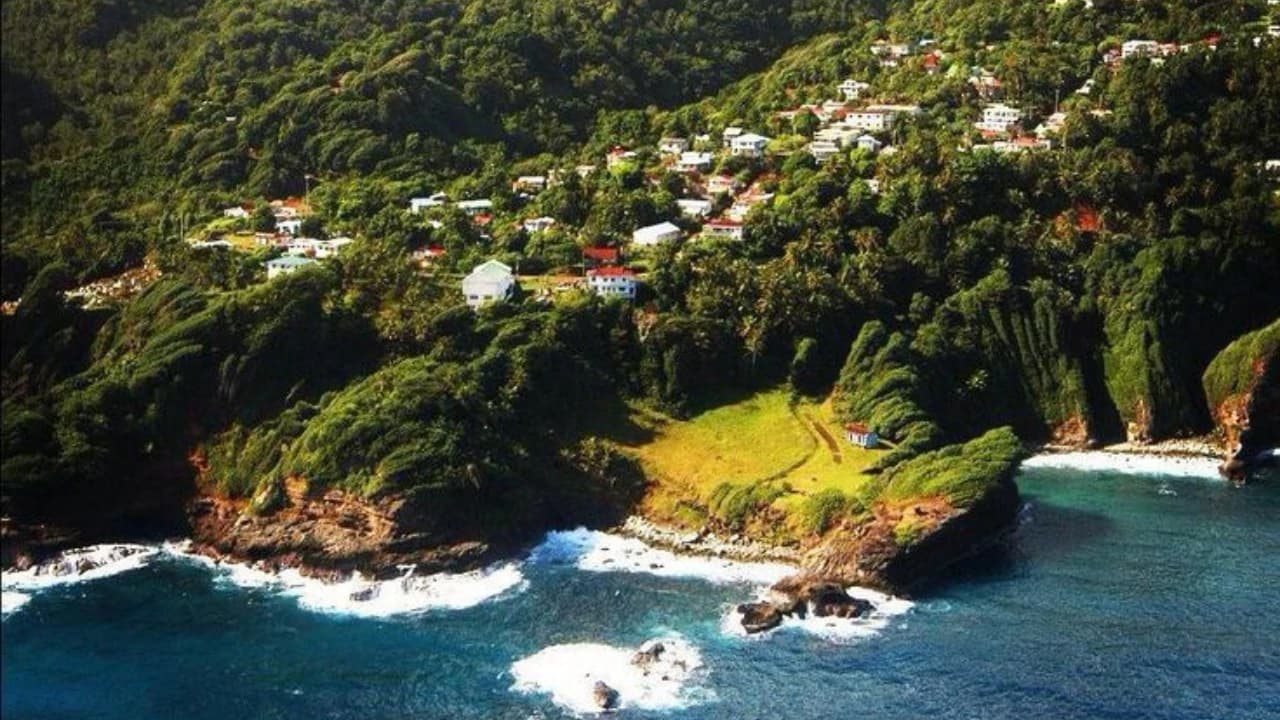
"I went to go visit it, hacked my way through, and then went by boat and saw this property and discovered this beach. And it was just this paradise that nobody knew was there."
Then came the research. Michael learned that the Caribbean Development Bank would fund a new coastal highway running north to south, passing right by Coconut Point. For a developer, he says, access and location are the two things you must get right. The highway was completed about 18 months before the episode was recorded, and it is now the main north to south road.
He took over as developer, designed the master plan and put a shovel in the ground for the access road in 2019, just as COVID began. The timing was hard, but it gave the team time to build the road infrastructure.
Why Does A Lagoon Location Matter Now?
Caribbean buyers always balance risk, Michael says. Oceanfront is wonderful, but low-lying land on the open sea carries hurricane exposure. Sargassum seaweed has also changed the investment picture.
Five years ago, he explains, buyers wanted east-facing homes for the sea breeze. Now that breeze pushes sargassum onto those beaches, and west-facing areas such as Grace Bay in Turks and Caicos and Seven Mile Beach in Grand Cayman have become the high-end addresses because they are sheltered from it.
Coconut Point sits inside an inland saline lagoon system. Michael says its 1,000-foot beach has zero sargassum, and the site is protected from storm surge while still having boat access to the open ocean through a channel.
Being near the highway changes daily life too. Michael says the community is about 45 minutes from the international airport, so owners are on an island, but not stuck on an island.
"You have the benefits of being on the mainland, but you have the lifestyle of an island."
How Is Coconut Point Designed Differently?
Michael says he studied what other developments in the region had done, what worked, what failed and why. His conclusion is blunt: developers fail mainly because of ego.
"You have to leave your ego at the door. And you have to be able to take critique, advice and proper feasibility studies."
He calls Coconut Point his last project before he goes fishing, and it draws on everything he has done: residential, hospitality, food and beverage, retail and commercial. The aim is balance, so the restaurants and beach bar add to owners' lives without intruding on them.
- Low density and large lots. The smallest lots are half an acre, about 22,000 square feet, with 150 feet of waterfront on a canal or the bay. Michael says these are the largest lot sizes of any development in Belize.
- A lean HOA. The HOA covers interior road maintenance and 24-hour security, and that is it. Commercial businesses are standalone and pay their own security, insurance and upkeep.
- No build deadline. Owners can build now or in ten years. Many developments require building within three years.
- In-house financing. Coconut Point offers in-house mortgages of up to 15 years.
- No developer debt. Michael says the project has zero debt and no bank loans, and it develops as fast as permits and the weather allow.
The results so far, by his account: phase one sold out, phase two about 85 percent sold, all before the first phase was completed. Near the end of the conversation he said only about five lots remained in phase two, with one resale in phase one.
Who Is Buying At Coconut Point?
Michael describes a broad mix. Seven well-established Belizean families own there. About 60 percent of buyers are from across the United States, including Florida, California and Colorado. There are many Canadians, plus owners from Britain, Australia and South Africa.
Most are between one and eight years from retirement. Some buy land now, pay in installments and build when they retire. Others build right away and rent the home on Airbnb or VRBO until they move in.
He expected speculators, drawn by the new highway and a planned rise in prices. Michael says prices have doubled in five and a half years through that planned appreciation. Yet about 95 percent of owners bought to build, not to flip. Stephanie noted what that means on the ground: real homes going up instead of empty lots.
What Does It Cost To Buy Land And Build A Home?
This is the number most listeners wait for, and Michael was specific. When he designed the project, he asked whether a retired couple of school teachers could take their pension and build a home there.
"Could a retired couple who were school teachers take their pension, buy a piece of land and build an 1,800 square foot, three bedroom home in Belize? And the answer is yes, you could do it for $300,000, $350,000 for the land and the house complete."
| Item | What Michael shared |
|---|---|
| Phase three entry-level lot | About $92,000 to $93,000, including legal fees, closing costs and the 8 percent stamp duty |
| Finished build cost | About $130 to $150 per square foot |
| 1,800 sq ft, three-bedroom home with land | About $300,000 to $350,000 all in |
| Smallest lot | Half an acre (about 22,000 sq ft) with 150 feet of waterfront |
| Financing | In-house mortgages of up to 15 years |
The build figure covers concrete block construction with reinforced steel, hurricane-rated glazing, doors and window systems. Michael says Coconut Point is the only development in Belize that includes the transfer tax in the lot price, and that it generally comes in about 10 percent cheaper than other developments. Prices are as stated at the time of recording and may change.
What Closing Usually Costs In Belize
Airdomo's Belize guide notes that stamp duty for most American buyers is 8 percent on the greater of the price or the assessed land value, with the first BZ$20,000 exempt. With legal, registry and survey costs, a typical budget runs about 10 to 12 percent above the purchase price. If a price includes these costs, confirm exactly which ones in your contract.
How Does Building A Home In Belize Work?
Michael says the process is fairly simple. Coconut Point works with four or five recommended architects. Owners can bring their own plans or architect, but a Belize architect must draw and sign them off, and engineering and structural work must be approved locally.
Standards Owners Build To
Every architect and owner receives the community's design guidelines, and Michael personally vets the plans for setbacks and height limits. Owners have his number and can reach him at any time.
- No temporary structures or mobile homes. Homes must be hurricane rated, in reinforced concrete block.
- A minimum home size of 1,200 square feet, with a footprint of up to about 20 percent of the lot, or roughly 4,400 square feet on the smallest lots.
- Residential sewage treatment plants instead of septic tanks, which are not allowed.
- A 12,000-gallon rainwater cistern built into the foundation, usually under the carport, backed by a 26,000-gallon-a-day well on site.
Most owners are adding solar, which Michael says has fallen sharply in price as battery technology improves. Rainwater harvesting also means no miles of water lines and pumps, which helps keep HOA fees low.
How Long It Takes
If you know what you want and avoid endless revisions, Michael says design and Central Building Authority approval can take 60 to 90 days. He says the CBA has an unwritten rule that plans without a decision within 30 days are approved automatically. A simple build takes about seven to nine months, depending on the contractor and how closely you follow up. Start to finish, a buyer in a hurry could walk into a new home in about 12 months.
What Is Everyday Life Like?
Stephanie asked Michael to describe a Tuesday morning. His first word was quiet. An eight to ten knot breeze comes off the lagoon. When you step outside you see water, then mountains and rainforest. There are no cars, and the highway is three miles away and out of earshot.
Early in the morning, manatees swim past. Michael says the surrounding lagoons hold the largest breeding colony of West Indian manatees in the Caribbean, so the community has no-wake zones and does not allow jet skis. The lagoon sanctuary covers about 9,200 acres, and around it lies roughly 92,000 acres of the Manatee Forest Reserve.
Every lot is waterfront, so the back of the home is where life happens: the boat lift, the pool, the terrace and the barbecue. Owners can head out through the channel to the cayes and the barrier reef, then return to sheltered water. Belize City is about 55 minutes away and the capital, Belmopan, about 35 minutes.
More is planned. Michael has released an investment offering to bring partners into a boutique hotel, with a second boutique hotel planned in phase three. He wants four or five dining choices, including a casual feet-in-the-sand beach bar, while the residential neighborhoods stay private behind boom gates.
Healthcare, Groceries And Getting Around
For everyday and emergency care, Michael points to Belize Medical Associates in Belize City, with specialists from neurosurgery to chiropractic. Many expats travel to Mérida in Mexico for procedures, and he notes direct flights from Belize to Panama City.
Belmopan has good markets and shops. Belize is food independent, Michael says, exporting beef, poultry, fish, citrus, rice and maize, and produce in the market is often picked that morning. The one thing he imports is a Cuban coffee he orders from Amazon and ships down weekly through a Florida freight forwarder.
Why Belize Over Other Caribbean Markets?
Years ago, Michael ran a feasibility study across the Caribbean and Central America. Belize, Panama, the Cayman Islands and Turks and Caicos all made his list, and he says not much has changed. For him, three things set Belize apart: the legal system, the English language and a currency pegged to the US dollar. Only Panama, which uses the US dollar, matches that last point.
Buyers receive fee simple freehold title, which they can leave to their children. Michael says Belize has no inheritance tax and no capital gains tax, so a home bought and built for $400,000 and sold for $1 million would owe no capital gains in Belize, and the proceeds can be repatriated.
Your Home Tax Rules Still Apply
American owners keep their US tax obligations. Airdomo's Belize guide notes that rental income is generally reportable in the United States, foreign accounts may require FBAR filings, and buying property does not grant Belize residency. Speak with a cross-border tax adviser and an independent Belize attorney before you buy.
For a local advisor's view of title and the buying process, see Owning Paradise Ep. 1 on Belize property ownership.
Stephanie closed by saying she has a real appreciation for developers, because she has seen so many plans that never leave the rendering stage. Coconut Point is being built, sold and lived in. Michael's approach is simple to say and hard to do: listen to what buyers need, remove the barriers, and keep your ego out of it.
Frequently Asked Questions
Can foreigners own property in Belize?
Yes. Americans can buy and own property in Belize, including freehold land, without becoming residents or taking a Belizean partner. A non-resident purchase follows the Central Bank process and is recorded at the Land Registry.
Where is Coconut Point in Belize?
Coconut Point is on a 220-acre island in a lagoon system on the Belize coast near the village of Gales Point. Michael Beggs says it is about 45 minutes from the international airport, 55 minutes from Belize City and 35 minutes from Belmopan.
How much does it cost to build a home in Belize?
Michael Beggs puts finished build costs at Coconut Point at about $130 to $150 per square foot for hurricane-rated concrete block construction. He says an 1,800 square foot, three-bedroom home with land comes to about $300,000 to $350,000.
How long does it take to build a house in Belize?
Michael says design and approvals can take 60 to 90 days and a simple build seven to nine months. A buyer in a hurry could move in about 12 months after starting.
Does Coconut Point offer financing?
Yes. Michael says Coconut Point offers in-house mortgages of up to 15 years, and many buyers pay for their land in installments before they build.
Is there capital gains tax in Belize?
Michael says Belize has no capital gains tax and no inheritance tax. American owners still have US tax obligations, so speak with a cross-border tax adviser before you buy.
Does buying property in Belize give you residency?
No. Buying property does not grant Belize residency. The Qualified Retirement Program is a separate route for applicants aged 40 or older who meet income and stay requirements.