- Your first task after closing is to confirm the deed is registered in the Public Registry of Property and to keep a complete owner's file.
- In the coastal and border restricted zone, your fideicomiso carries an annual bank trustee fee and should name the beneficiaries you intend.
- Budget for predial, HOA dues, the trust fee, insurance, utilities and maintenance, and test the numbers in pesos as well as dollars.
- Renting is often possible, but registrations, building rules and Mexican tax apply before the first guest arrives.
- Owning a home does not by itself grant residency, and American owners have reporting duties at home as well as in Mexico.
The signing before the notario feels like the finish line. In practice, it is where ownership begins. The first twelve months set the habits that keep a Mexican home simple to own: clean paperwork, a realistic budget, the right people on the ground and a tax plan on both sides of the border.
Mexico is close, familiar and easy to visit for many American buyers, yet it is not one market. Federal law sets how foreigners hold property, while states and municipalities shape property tax, rental rules and local procedures. This checklist follows the year in order, with examples from homes currently listed on Airdomo in the Riviera Maya, where foreign residential buyers normally own through a fideicomiso.
What should you do in the first 30 days after closing?
Start with the title. Every transfer in Mexico is formalized before a notario público, who prepares the public deed (the escritura pública), checks the registry and taxes, and submits the transfer for registration in the local Public Registry of Property. Registration follows the signing, so ask the notario when to expect the registered deed and follow up until it is in your hands.
Next, build one owner's file, in print and in the cloud. It should hold the registered deed, the fideicomiso documents and federal permit where they apply, the appraisal and certificates from closing, receipts for every closing cost, the condominium documents and HOA rules, and the most recent paid property tax and water bills. On a future sale, the notario reviews your basis and invoices before calculating any Mexican tax due, so good records now pay off later.
Finally, confirm who receives the predial (municipal property tax), water, electricity and HOA bills, and how each is paid while you are away.
How do you keep your fideicomiso in good order?
If your home is within 50 kilometers of the coast or 100 kilometers of an international border, the area known as the restricted zone, you most likely own it through a fideicomiso. A licensed Mexican bank holds legal title as trustee, and you are the beneficiary who directs permitted decisions on use, improvement, rental, sale and succession. The authorization can run for up to 50 years and may be extended.
Three items belong on your first-year list: schedule the bank's annual trustee fee, confirm the beneficiaries named in the trust reflect your wishes (and fit your wider estate plan), and keep the bank's details on file, since any amendment or transfer carries its own fees.
A fideicomiso is ownership, not a lease
The trust gives you the use and economic benefit of the home, and you can use, lease, sell or pass on your rights. It is not a rental arrangement with the bank. Outside the restricted zone, for example in much of Mexico City and the Central Highlands, foreign owners can generally hold direct title instead.
What will the home cost to carry in year one?
Most buyers budget roughly 5 to 10 percent above the purchase price for closing. Once that is paid, recurring costs take over, and they vary by state, municipality and building.
| Cost | What it covers | Who pays it |
|---|---|---|
| Predial | Annual municipal property tax based on local cadastral values | All owners |
| Fideicomiso fee | The bank's annual trustee fee | Owners in the restricted zone |
| HOA or condominium dues | Shared amenities, staff, reserves and upkeep; can be a material part of annual cost | Condominium and gated-community owners |
| Utilities | Electricity, water, gas and connectivity | All owners |
| Insurance | Cover for the structure and contents | All owners (strongly advisable) |
| Maintenance and management | Routine upkeep, cleaning and a property manager if you rent or are often away | All owners |
Then test the budget in two currencies. Many resort homes are quoted in US dollars, but Mexico operates in pesos, and taxes, operating expenses and local bills can move differently from the dollar price you paid.
Can you rent the home out in your first year?
Often, yes, but legality and economics are specific to the property. State and municipal rules may require registrations, operating notices, civil-protection compliance or lodging-tax treatment. The condominium regime or HOA may prohibit or limit short stays, so read the building rules before you list.
Rental income is taxable in Mexico, and income earned through digital platforms remains subject to Mexican tax rules and platform reporting or withholding. VAT or state lodging tax may also apply, depending on the rental structure. In resort markets such as the Riviera Maya, Los Cabos and Puerto Vallarta, demand is real but seasonal, and results depend heavily on management quality, airline capacity, new supply and local regulation.
If you plan to rent, confirm permitted use and licenses first, then agree in writing with a vetted manager on fees, reporting and how income reaches you.

Check the building rules before the first booking
A condominium regime can restrict short stays even where local rules allow them. Confirm permitted use, licenses and HOA rules in writing, and independently verify any rental history a seller or developer has shared.
What do American owners need to file at tax time?
Your first tax season as an owner has two sides. In Mexico, rental income is taxable, and when you eventually sell, the notario calculates and withholds any Mexican income tax due. In the United States, you report worldwide income, including Mexican rent, and apply treaty and foreign-tax-credit rules correctly so the same income is not taxed twice.
Accounts matter too. A Mexican bank account opened to pay bills or receive rent may trigger an FBAR filing, and foreign financial accounts may also need to be reported on Form 8938. The IRS explains both on its pages for the FBAR and FATCA reporting.
What about the trust itself? A straightforward Mexican land trust of the type described in IRS Revenue Ruling 2013-14 is generally not treated as a foreign trust for US filing purposes. Even so, have a US tax adviser review your trust documents during the first year, ideally before you file your first return as an owner.
Does owning a home in Mexico give you residency?
Not by itself. Buying a home does not automatically grant Mexican residency or citizenship. Current immigration rules allow qualifying real estate ownership above a prescribed value to support certain temporary-residence applications, but the threshold is tied to the official UMA measure, and the immigration process is separate from closing.
If you plan to spend longer periods in Mexico, make residency its own item on the list. Confirm the current figure and the evidence required with the Mexican consulate handling your application, since consular practice can differ and rules can change.
How should you look after the home while you are away?
A second home needs someone on the ground. Before your first long absence, decide who checks the property, who holds keys, who meets contractors and who you call when something breaks. In a full-service building this may be the HOA or concierge team; for a private villa it is usually a property manager or a trusted caretaker.
Use the first year to learn the home's systems, from water purification to air conditioning and any solar installation, and keep service contacts on file. Coastal homes ask more of their finishes and equipment, so set a regular maintenance rhythm.
If you own in a condominium, read the HOA budget and reserves at your first annual meeting. Mature buildings bring operating history and resale evidence, but reserves, rental rules and structural maintenance still deserve an owner's attention.

Which Riviera Maya homes suit a smooth first year?
Every home below sits in Quintana Roo, inside the restricted zone, so foreign buyers would normally own through a fideicomiso. They differ in how much the building does for you.
| Home | Location | Bedrooms and baths | Price (USD) |
|---|---|---|---|
| Villalta Laguna 2 Bedroom Condo | Cancún, near Nichupté Lagoon | 2 beds, 2 baths | $421,000 |
| Ikal Living 3 Bedroom Penthouse | Playacar, Playa del Carmen | 3 beds, 3 baths | $525,000 |
| Zonna 1 Bedroom Beachfront Condo | Beachfront, Playa del Carmen | 1 bed, 1 bath | $641,500 |
| Selvamar 3 Bedroom Villa | Selvamar, Playa del Carmen | 3 beds, 4 baths | $765,909 |
| Saint Marine 3 Bedroom Penthouse | Beachfront, Playa del Carmen | 3 beds, 3 baths | $1,952,700 |
Villalta Laguna 2 Bedroom Condo, $421,000
Near Nichupté Lagoon in Cancún, these two-bedroom condos start at approximately 1,416 square feet, with a flexible second bedroom that can serve as a guest room or home office. The development is planned around more than 10,000 square meters of common areas, including two family pools, a padel court, an air-conditioned gym and 24-hour security, and the Hotel Zone is about 15 minutes away. View the listing.
Ikal Living 3 Bedroom Penthouse, $525,000
This two-level penthouse in a quiet part of Playacar spans 3,821 square feet, with two deeded parking spaces and only one residence per floor. Its private rooftop holds a large pool, a wood deck and terraces overlooking greenery toward the 18th hole of the Hard Rock Golf Course, and Fifth Avenue is only minutes away. View the listing.
Zonna 1 Bedroom Beachfront Condo, $641,500
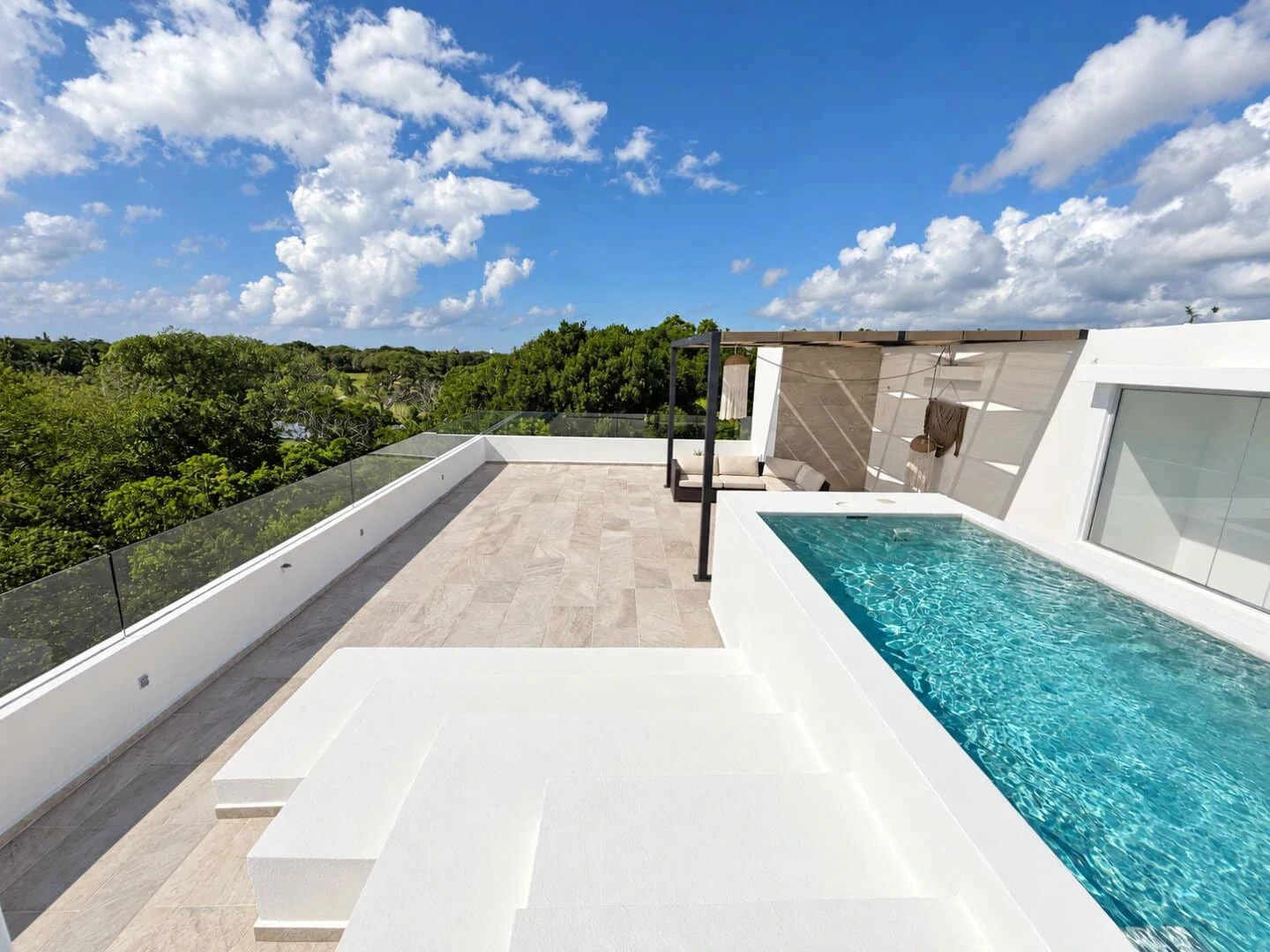
A 904-square-foot one-bedroom at Zonna Beachfront Residences, near Mamita's Beach and within easy reach of Fifth Avenue. Residents share a rooftop infinity pool with ocean views, a fitness center, an exclusive beach club and landscaped gardens, a straightforward setup for owners who will spend part of the year elsewhere. View the listing.
Selvamar 3 Bedroom Villa, $765,909
Casa del Árbol is a three-level home in the gated Selvamar community, with 4,069 square feet of construction, a private pool, three bedrooms plus a gym that could become a fourth, and four full bathrooms plus a half bath. Practical systems include 12 solar panels, a water softener and reverse-osmosis water purification. View the listing.
Saint Marine 3 Bedroom Penthouse, $1,952,700
These upper-floor penthouses on 4th Street North offer Caribbean Sea views, direct beach access and private rooftop terraces, with select residences adding a private plunge pool. Residents have an oceanfront infinity pool, a rooftop pool and bar, a fitness center, sea-view coworking and 24-hour concierge and reception, which can make ownership from afar much simpler. View the listing.
Prices and availability are as listed on airdomo.com at the time of writing and may change.
What belongs on your one-year checklist?
- Registered deed received and stored with your complete closing file.
- Fideicomiso annual fee scheduled and beneficiaries confirmed (restricted zone only).
- Predial, utility and HOA accounts confirmed, with a way to pay them from abroad.
- Annual budget built in pesos and dollars, including insurance and maintenance.
- Rental rules, licenses and HOA restrictions confirmed in writing before any listing.
- Property manager or caretaker appointed, with keys and contacts on file.
- Mexican and US tax advisers coordinated, including an FBAR and Form 8938 review.
- Residency plan confirmed with the consulate, if you intend to stay for longer periods.
Frequently asked questions
What does it cost to buy a home in Mexico beyond the price?
Plan for approximately 5 to 10 percent of the purchase price, covering acquisition tax, notarial and registry fees, legal review and, in the restricted zone, the fideicomiso setup and federal permit.
Do I pay a fee every year for my fideicomiso?
Yes. Owners in the restricted zone pay the bank's recurring trustee fee, and amending or transferring the trust carries further fees.
What is predial?
Predial is Mexico's annual municipal property tax, based on local cadastral values. It differs by municipality, so confirm yours with your notario or property manager.
Can I rent my home in Mexico during the first year?
Often, yes, but local registrations and the building's HOA rules can limit short stays, and rental income is taxable in Mexico.
Does buying a home in Mexico give me residency?
Not automatically. Ownership above a value tied to the UMA measure may support a temporary-residence application, through a separate process confirmed with the consulate.
What do American owners report to the IRS?
Worldwide income, including Mexican rent, with foreign tax credits applied. Foreign accounts may trigger FBAR or Form 8938 reporting, and a US adviser should review your trust documents.