- Austin Hess, COO of DoPanama.com, has lived in Panama for almost 15 years and works only on the buyer's side.
- He says most people arrive for the savings and stay for the lifestyle, the people and the sense of calm.
- Panama City pairs a true metropolitan life with mountains, islands and white sand beaches within about an hour or two.
- Legal short-term rental buildings are in strong demand, and Austin expects stricter enforcement of the 45-day rule to remove most illegal listings.
- Safety is his favorite thing about Panama, and he sees more young families, not only retirees, choosing to stay in the city.
Every move abroad has an origin story. Austin Hess's begins with a river, a rumor of gold and a five-day decision. Almost 15 years later, he helps hundreds of newcomers find their own place in Panama.
That is the story Austin shared as the second guest on Owning Paradise: The People Behind The Places, Airdomo's interview series hosted by Stephanie Gilezan. The series introduces buyers to the builders, brokers and developers shaping the destinations Airdomo represents. After Belize in episode one, this time the focus is Panama.
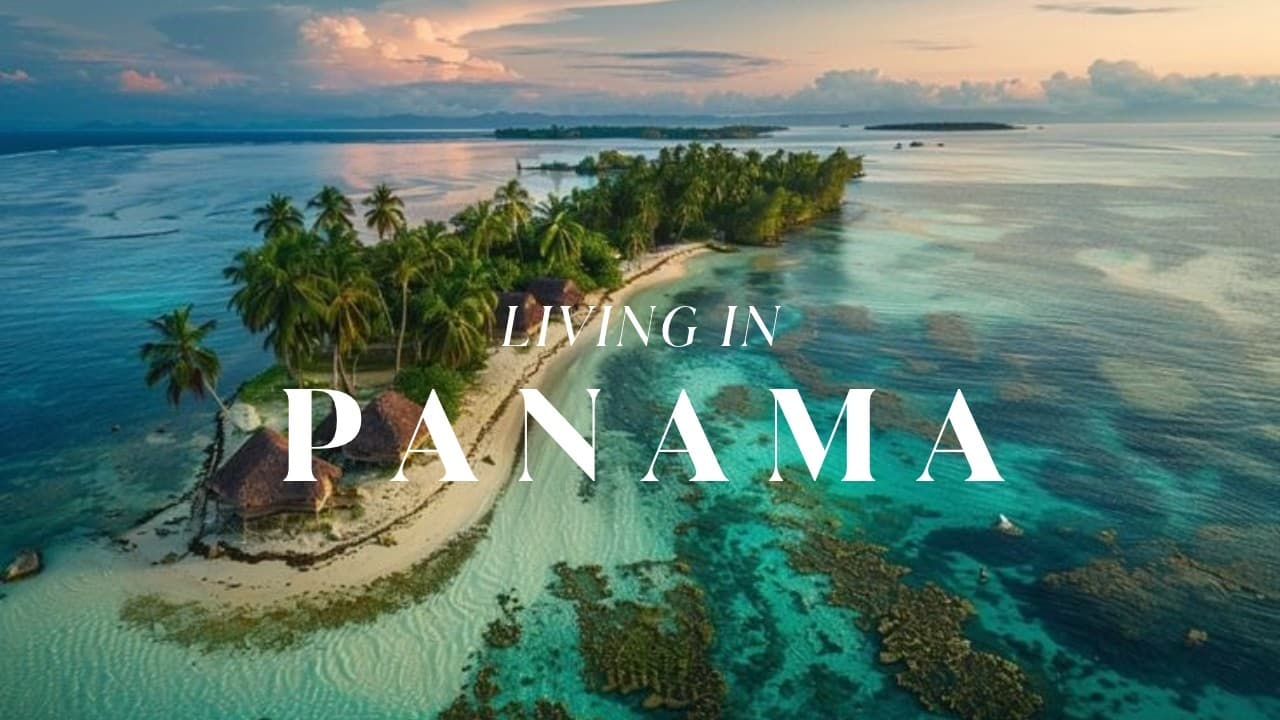
How Did Austin Hess End Up Living And Working In Panama?
Austin describes himself as American as it gets. He did not move to Panama for real estate. He came on the coattails of friends, one of whom had bought land with a small hotel near what Austin calls the largest copper deposit discovered on Earth. Their logic was simple: where there is copper, there may be gold.
Five days after hearing the plan, they were on their way to Panama to pan a river.
The Trip That Turned Into A Life
The gold was not the story. The country was. Austin stayed, built a life and, with his business partner, started DoPanama.com, a licensed and bonded real estate company with a team of licensed brokers. He says the firm has been called "the buyers' brokers" because it works for newcomers rather than sellers. Its YouTube channel now has more than 180,000 subscribers, which means Austin talks with a steady stream of people thinking about the move.
His approach is closer to lifestyle planning than selling.
"Yes, we want the client happy today, but we want to make sure they're happy in five, ten, 15 years from today."
What Do People Get Wrong About Panama Before They Arrive?
When Stephanie asked what outsiders get wrong, Austin turned the question around.
"I feel like it's not what they get wrong, but what they discover."
Many people come for the savings, he explains. You can buy two pineapples off the back of a truck for a dollar or two, and he calls them the best pineapple in the world. But by the third day, he often sees visitors start to change. Instead of a constant negative news cycle, everyday conversation in Panama tends to be about a bird someone spotted, a weekend hike or a new restaurant.
Austin describes running into clients eight months after their move and barely recognizing how relaxed they have become.
"They come here for the savings, but they're like, oh my gosh, my soul, my energy. You come for one reason, but you get so much more."
He credits much of that to the Panamanian people, whom he describes as gracious and kind-hearted, and to the outside-the-box thinkers now arriving from the Caribbean, Europe, Australia and Dubai, as well as the United States and Canada.
Is Panama Really Costa Rica 20 Years Ago?
Stephanie has heard developers use that comparison. Austin does not think it fits. Costa Rica, he says, has no metropolitan city like Panama City, so the two are hard to compare at all. He has visited many cities around the world and calls Panama City magical.
One detail he loves is the view at night. In most coastal places the ocean goes dark after sunset. In Panama City, ships waiting to transit the Panama Canal light up the water.
A City Still Being Built
Here is the infrastructure Austin pointed to as proof that Panama is still growing:
- A cruise port that opened a few years ago on the Causeway.
- A large new convention center, finished around the end of the pandemic.
- A fourth bridge now being built over the Panama Canal.
- The metro, which Austin believes is the only underground metro in Central America, now being extended under the canal to the other side to expand the city.
He also mentions that some people now describe Panama as the Dubai of the Americas, with investment flowing into an economy he sees as having a bright future.
Can You Have City Life And Island Life In Panama?
This is where Austin's favorite phrase comes in.
"I always tell people there's a flavor of ice cream for everything."
He is a city person who also loves the mountains. From Panama City he can drive about an hour into the hills to watch some of the most beautiful birds in the world, or take a ferry from Amador to the Pearl Islands. He says white sand beaches and turquoise water are about an hour and a half away. You do not have to live in the beach town to enjoy the beach.
For buyers drawn to that city-meets-ocean balance, Airdomo lists homes in Amador such as this low-rise development, where two-bedroom, two-bathroom apartments are listed at $238,000, close to the Amador Causeway and the Biomuseo.
Why Austin Asks About More Than The Dream
On first calls, some clients tell Austin they want to live under a coconut tree. His response is to get to know them first. Do they have school-age children? Might they need medical care in the next five years? If so, living closer to the city may serve them better.
Austin names a Johns Hopkins affiliated hospital, the Panama Clinic, Hospital Nacional and Punta Pacifica hospital among the options in the capital. He recalls filming on a rooftop when a couple of US veterans recognized him and told him the VA program in Panama worked better for them than the one back home.
How Did Panama Become A Retirement Destination?
Austin traces it back to the canal. The United States managed the canal until it handed it over going into 2000, and he says tens of thousands of Americans connected to it left at once. Panama responded by courting new residents, starting with a pension visa.
As Austin describes it, a retired person with a pension of $1,000 a month could qualify, and $1,250 a month allowed them to bring a spouse or dependent. That opened the door for retirees in places such as Boquete, Bocas del Toro and Coronado. Requirements can change, so confirm the current thresholds with an immigration attorney before you plan around them.
Many retirees who started at the beach later moved closer to the capital. Austin says Coronado can feel a little slow for full-time life, while Panama City offers one of the best food scenes he has experienced. He even believes the Italian food is better than what he ate on a recent trip to Italy, because Italian chefs in Panama take pride in their heritage and import ingredients such as flour by the container.
Owning A Home Does Not Grant Residency
Buying property in Panama does not automatically give you immigration status. Pension-based residency, the Qualified Investor program (which requires a qualifying real estate investment of at least US$500,000, funded from abroad and held for five years) and other routes each have their own rules. Confirm your residency plan with an attorney before you sign.
What Are Buyers Purchasing In Panama Right Now?
Austin says the mix is diverse. Here is how he breaks it down:
- Plan B buyers and snowbirds. People who arrive after Christmas and use a home three or four months a year, or travelers who only need a base for part of the year.
- Legal short-term rental units. Usually smaller apartments that owners can live in full time, rent out full time or do both. Austin calls them really hot right now.
- Larger homes and lifestyle properties. Bigger condominiums, single-family homes, beach houses and island living for buyers who want more space.
Austin filmed the episode from a model unit in Uptown, a legal short-term rental building in Panama City. A private foundation whose council he sits on bought a unit there.
Uptown is also listed on Airdomo. According to the listing, the project by Empresas Bern has a hotel permit that allows short- and long-term rentals through platforms such as Airbnb, Booking and Expedia, subject to its operating conditions. A furnished 88 m² two-bedroom, two-bathroom unit on the 26th floor is listed at $422,400, with delivery expected in the first half of 2029.
Austin has also noticed a clear shift over the past year: even retirees are increasingly choosing the city. The beach is wonderful for three to five days, they tell him, but city life suits them better day to day.
What Is Changing For Short-Term Rentals In Panama City?
This may be the most important part of the conversation for investors. Here is how Austin explained the rule and where it is heading:
- A long-standing law sets a 45-day minimum for renting out an individually owned condominium, unless the whole building is registered as a condo hotel with the tourism authority.
- Austin links the rule to the new convention center, saying the country wanted to support hotel capacity for conventions.
- The law was barely enforced. By his estimate, 85 to 95 percent of Panama listings on Airbnb and Booking.com are not legal.
- Legislation is now moving forward to create a committee to regulate it, and he expects platforms to ask hosts for a letter from the tourism authority.
Airdomo's Panama destination guide notes the same 45-day rule in the district of Panama, and adds that building regulations may be stricter.
"All of a sudden, 85 to 95% of the current competition on that platform will disappear. Great opportunity."
He also sees legal rental buildings as a hedge against life changes. You might live in Panama full time this year, then spend more time back home when a grandchild arrives, and rent the unit out in the meantime.
Check The Permit Before You Model Rental Income
Never assume a unit can be rented short term. Ask for written proof that the building holds the required tourism permit, read the building's rules on rentals, and have your attorney confirm both before you sign or pay a non-refundable deposit.
Who Is Moving To Panama Now?
Stephanie raised a trend she sees with younger buyers. In the United States, she noted, the average first-time homebuyer is now around 40, so many people in their twenties and thirties are looking abroad to own a home. Austin sees it too, and not only among first-time buyers.
He describes well-off families in their thirties and forties arriving with three children and buying condos around $1.2 million in Costa del Este. Their reason is often the pace of life. Austin compares Panama to the United States in the early 1980s, when children came home when the streetlights came on.
He is raising his own son there. Their weekends include hikes to waterfalls, island days, go-karts and movies, which he notes are shown in English in Panama's cinemas.
Do You Need To Speak Spanish To Live In Panama?
Austin answered this one with honesty. Going into his 15th year, he is only now taking Spanish seriously, with classes every weekday at 6 a.m. His point is that you can get by without it.
Where it gets harder, he says, is the supermarket or hardware store when you need something specific. Even then, a translation app or a photo from a quick search usually solves it. His son, meanwhile, speaks Spanish most of the time with friends and his mother, and English with dad and family back home.
Is Panama Actually Safe For Families And Buyers?
When Stephanie asked what Austin most wanted people to know, his answer was safety. He travels widely and says many places make him feel he has to watch his back, with signs warning about pickpockets. In Panama, he says, he does not see much crime.
"I don't think I've ever felt more safe. Ever."
The only place that compares for him, he adds, was living in San Luis Obispo, California. As a father, he values being able to let his son be safely independent. He says newcomers are often surprised to find themselves walking the streets at night without a second thought.
With a capital that is still growing, beaches and mountains within reach, strong medical care and a culture he describes as gracious and calm, Austin sees Panama as a place with a flavor for every kind of buyer. His advice is the same one he gives on every first call: start with the life you want in five, ten and 15 years, then choose the home.
Prices and availability are as listed on airdomo.com at the time of writing and may change. Missed the first episode? Read our recap of Owning Paradise Ep. 1 in Belize.
Frequently Asked Questions About Buying Real Estate In Panama
Can Americans buy property in Panama?
Yes. Americans can generally buy and own titled property in their own names or through an appropriate entity. The main exception is land within ten kilometers of Panama's international borders, and beaches and other public-use areas cannot be privately owned. An independent attorney should confirm the property has registered title before you sign.
Can I rent out my Panama City condo on Airbnb?
Only if the building is permitted for it. In the district of Panama, rentals shorter than 45 days are prohibited unless the operator holds a public tourist accommodation permit, and building rules can be stricter. Austin Hess expects enforcement to tighten, so buy in a building that can prove it is registered.
Does buying property in Panama give me residency?
Not by itself. Ownership and immigration status are separate. The Qualified Investor program offers permanent residence for a qualifying real estate investment of at least US$500,000 held for five years, and pension-based routes depend on income rather than a purchase.
What does it cost to buy property in Panama beyond the price?
On a straightforward cash purchase, buyers commonly budget about 2 to 5 percent for legal fees, notary and registry charges, escrow, survey and bank costs. The seller normally pays the 2 percent transfer tax. Ask for a written closing statement that shows who pays each amount.
Do I need to speak Spanish to live in Panama?
No. Austin Hess has lived in Panama for almost 15 years and says you can get by in English, with translation apps helping at places like the hardware store. Learning Spanish makes daily life easier, and he is now taking classes himself.
Is Panama a good place for families, not just retirees?
Austin sees more young families moving to Panama City, including parents in their thirties and forties buying in neighborhoods like Costa del Este. He points to safety, outdoor life, quality healthcare and English-language cinemas as reasons families settle there.