
For most of the last century, luxury real estate inherited its prestige from location. The view, the neighborhood, the architect, the era. The branded residence inverts that hierarchy. The brand becomes the asset, and the building becomes its expression. Aman, Four Seasons, Ritz-Carlton, Six Senses, Bulgari, Mandarin Oriental, and an expanding roster of fashion houses and automakers now sit alongside hotel operators in the residential market. Per the Knight Frank Global Branded Residence Survey 2025, the category now spans more than 1,000 live and pipeline schemes across 83 countries. The Savills Branded Residences Annual Report 2025/26 projected growth from 764 completed schemes (December 2024) to 910 by end of 2025, a 19% year-over-year expansion — Savills counts completed schemes, while Knight Frank’s 1,000-plus figure includes pipeline projects.
01Service infrastructure as the product
Branded residences inherit the operational backbone of the parent hospitality brand. Concierge, housekeeping, in-residence dining, security, fitness, and travel coordination operate at hotel-grade standards because they are the hotel-grade standards. For owners who travel often, hold property across multiple cities, or split time between residences, that operational lift is not amenity. It is the product.
The service distinction is most visible in what happens when an owner is not in residence. A branded residence is staffed and operationally maintained on a hotel-equivalent rotation. Pre-arrivals are anticipated, properties are stocked, transportation is coordinated, and any maintenance or service issue is handled by an established operational team rather than by an absentee owner managing trades remotely. For owners with multiple residences, this is the difference between owning property and operating property — the brand absorbs the operating burden as a contractual default.
02The premium underwriting advantage
Branded residences typically command a 25 to 35 percent premium over comparable unbranded units in the same submarket per Knight Frank and Savills research, and the premium has held remarkably well across cycles.
Resale data is now deep enough across multiple major brands and multiple markets to support that pattern, even acknowledging that buyer mix and unit specification vary. The brand is not just a marketing layer. It is a buyer-screening mechanism, a service guarantee, and a resale floor. When a branded residence comes back to market, the buyer pool inherits the same screening that drove the original premium — the brand affiliation pre-qualifies the asset on quality, service standards, and operational continuity. Unbranded properties at the same price point have to rebuild that signal from scratch on every resale.
The premium is not free. Branded residences typically carry higher HOA-equivalent monthly costs than unbranded comparables to fund the staff, service infrastructure, and brand-license fees. There is also typically an annual brand-management or service fee. For buyers who underwrite on absolute cost-of-carry, this can look unattractive. For buyers who underwrite on net experience plus resale resilience, the math typically clears.
03The borderless asset profile
A buyer with residences in Dubai, Miami, and the Maldives can hold all three under a single hospitality brand and get a consistent operational experience across them. Standardization at this level used to be impossible without a private staff. Branded ownership delivers it as a baseline. For buyers building international property portfolios, this consistency reduces operational friction at exactly the point where most cross-border ownership creates it.
The portfolio benefit compounds. An owner of multiple branded residences within the same operator family typically gains reciprocal access, integrated reservation systems, and a single point of operational contact across all holdings. Aman's residential owners have access to the broader Aman hotel network. Four Seasons private residence owners are integrated into the brand's global service framework. Six Senses, Mandarin Oriental, Ritz-Carlton, and Rosewood operate similar cross-property service architectures. For a globally mobile family that values predictability, this matters more than the unit specifics of any single property.
04The brands competing for the buyer
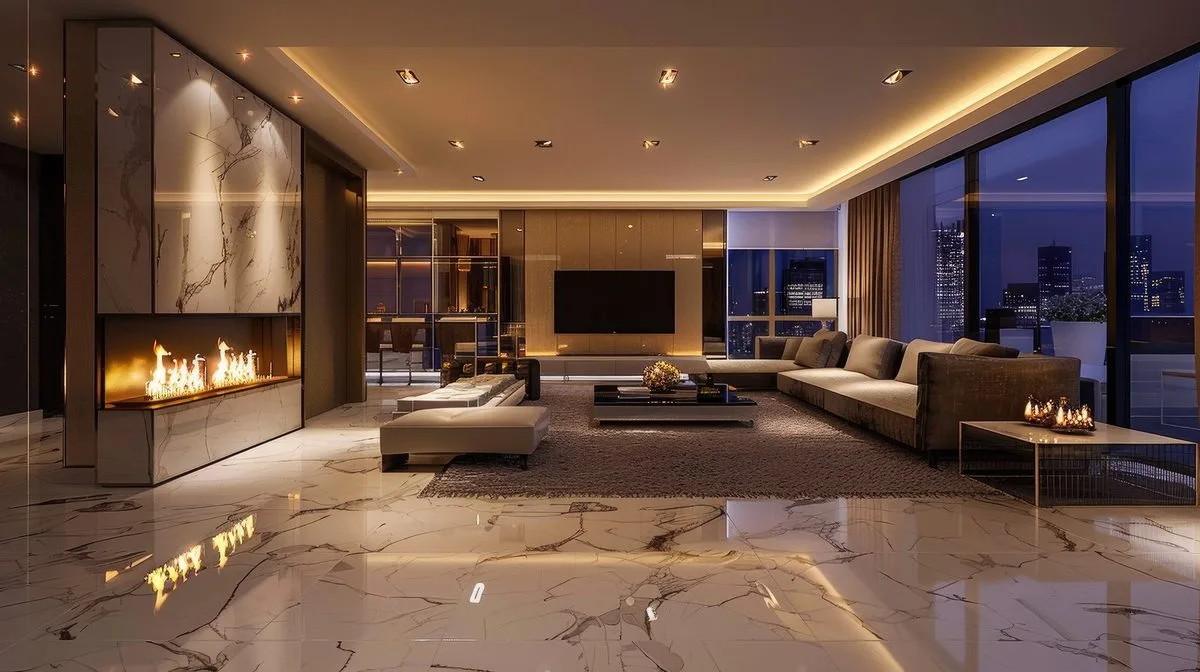
The hospitality operators most active in residential development are Aman, Four Seasons, Ritz-Carlton, Six Senses, Mandarin Oriental, Bulgari, Rosewood, and St. Regis. Each brings a slightly different positioning. Aman remains the highest-end of the set, with an exclusive ownership profile and unit counts kept deliberately small. Four Seasons has the broadest global footprint with pipeline in dozens of markets. Ritz-Carlton operates across more price points than Aman or Four Seasons, with strong North American depth. Six Senses leads on wellness and remote/destination locations. Mandarin Oriental and Rosewood compete in the upper tier in major global cities.
The fastest-growing segment is non-hotel brands entering residential. Fashion houses (Armani, Bulgari, Versace, Karl Lagerfeld, Missoni) and automakers (Aston Martin, Bentley, Porsche) now operate branded residential pipelines, often in partnership with established developers. The category logic is the same — a brand that has built consumer trust in one luxury domain is extending that trust into residential. The Savills 2025/26 report identified 39 new hotel brands and 19 new non-hotel brands entering the residential segment in a single year.
05Where branded development is heading
The next decade of branded development is geographically broader than the last. Markets including Saudi Arabia, Italy, Greece, Vietnam, and Mexico are seeing branded pipeline growth per Knight Frank's 2025 survey and Savills' 2025/26 annual report, alongside continued depth in the Caribbean, the UAE, and Southeast Asia.
The Knight Frank Wealth Report 2025 reports that 17% of surveyed family offices hold luxury residential and branded residences in their real-estate portfolios, and indicates nearly half of family offices intend to increase property allocation over the next 18 months. The buyer who treats branded residences as a discretionary luxury misses the trend. The buyer who treats them as portfolio infrastructure is reading the market correctly. The brand premium, the operational consistency, and the resale resilience together justify a structural allocation rather than an opportunistic purchase.
Frequently Asked
Common questions
What exactly is a branded residence?
A branded residence is a private home developed in partnership with a luxury brand (most commonly a hospitality operator like Aman or Four Seasons, but increasingly also fashion houses and automakers) where the brand provides design standards, service infrastructure, and operational management. The owner holds title to the residence; the brand provides ongoing service and operational continuity through a long-term licensing agreement with the developer or an operating company. The economic structure typically includes an upfront premium on purchase, ongoing service fees, and brand-license fees that fund the staff and operational infrastructure that distinguish branded properties from unbranded comparables.
How much premium do branded residences command?
Industry research from groups including Knight Frank and Savills places the premium at roughly 25 to 35 percent over comparable unbranded units in the same submarket. The premium varies by brand strength, location, and unit specification, but the directional pattern has held across cycles. Aman properties typically command the highest premiums, given the brand's exclusivity and small unit counts. Ritz-Carlton and St. Regis branded homes sit in the middle of the premium range. The premium also reflects the embedded value of service infrastructure, brand-license fees, and resale-resilience that buyers do not capture in unbranded comparables.
What ongoing costs are unique to branded residences?
Branded residences typically carry higher HOA-equivalent monthly costs than unbranded comparables to fund the staff, service infrastructure, and brand-license fees. There is also typically an annual brand-management or service fee. Specific cost structures vary by development; review the operating budget and brand agreement carefully before purchase. The brand-license arrangement is usually structured for a fixed term with renewal provisions, and any termination of the brand affiliation has material implications for the property's ongoing positioning. Buyers should review the brand agreement's term length, renewal mechanics, and termination consequences before closing.
Do branded residences hold their value better than unbranded comparables?
Resale data across multiple major brands and markets generally supports stronger resale resilience for branded residences, though performance varies significantly by brand, location, and market cycle. The brand serves as a buyer-screening mechanism on resale that unbranded properties do not have. The resilience is most pronounced in volatile markets and during downturns, when buyer flight to known brands intensifies. Aman, Four Seasons, and Ritz-Carlton historically show the strongest resale patterns. Newer or weaker brand affiliations carry less of this resilience, which makes the brand selection itself a meaningful underwriting variable.
Which brands are most active in residential development?
Aman, Four Seasons, Ritz-Carlton, Six Senses, Mandarin Oriental, Bulgari, Rosewood, and St. Regis are among the most active hospitality operators. The category has expanded to include fashion houses (Armani, Bulgari, Versace, Karl Lagerfeld, Missoni) and automakers (Aston Martin, Bentley, Porsche), each with growing residential pipelines. The Savills 2025/26 report identified 39 new hotel brands and 19 new non-hotel brands entering the residential segment in a single year. The category is broadening rapidly, which has both positive implications (more buyer choice, more competitive pricing) and a screening implication (newer brands carry less resale-resilience track record).