
Real Estate for Sale in Portugal
Historic Charm with Modern Luxury
Homes & Properties for Sale in Portugal
Showing 1–2 of 2 properties across Algarve and Cascais
Portugal
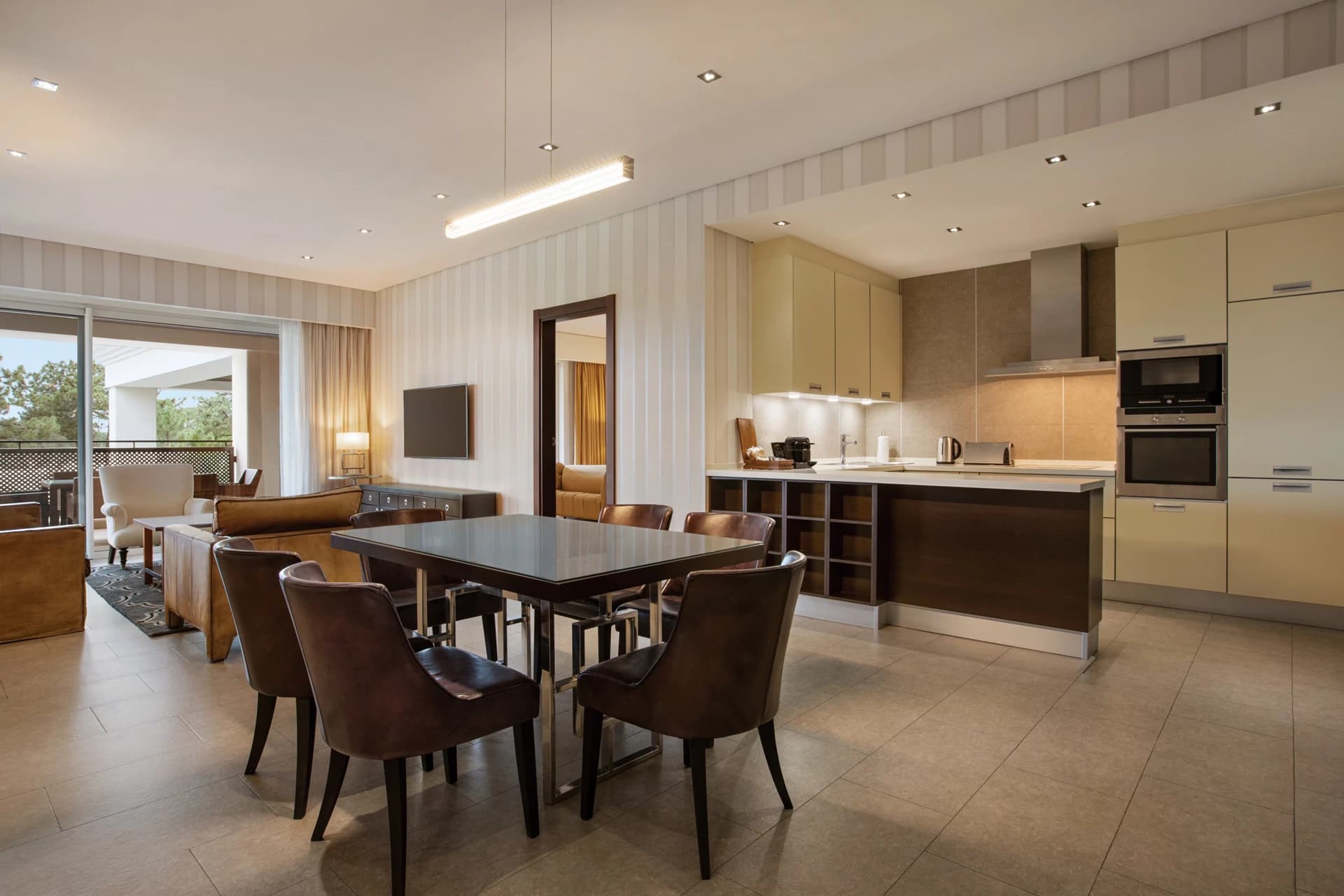
3 bed luxury penthouses for sale | Wyndham Grand Algarve

Portugal
Viceroy Residences at Ombria Resort - luxury branded apartments for sale Algarve
Filters
Price Range
Bedrooms
Bathrooms
Why Portugal
Value, safety, and a decade of building American demand
Market Character
Portugal has become one of the most sought-after destinations for American buyers in Europe, and the demand has been building for a decade. The appeal is a rare combination: a mild climate and long Atlantic coastline, a low cost of living relative to Western Europe, one of the safest and most stable environments on the continent, and a market that remains accessible on price compared to France, Spain, or Italy at similar quality.
Portugal is a small country, but its markets are distinct. Lisbon and the coastal towns around it, led by Cascais and Estoril, form the urban and prestige market with year-round demand. The Algarve, along the southern coast, is the established second-home and retirement market, with the deepest concentration of international buyers and the strongest holiday-rental performance. Porto and the north offer value and a growing city market, while the Silver Coast and Madeira serve buyers looking for lower entry points and quieter settings. Where you buy shapes the price, the property type, and the rental profile.
The buyer profile is heavily lifestyle-driven. Many international buyers are retirees, remote professionals, or second-home purchasers drawn by climate, safety, and value, and a large share come from the United States specifically. The market is end-user driven rather than speculative, which has helped it hold value and recover steadily rather than in boom-and-bust cycles.
Tourism and a steady inflow of foreign residents underpin the market. The Algarve in particular draws consistent visitor demand that supports both property values and rental income, while Lisbon's international profile keeps its market liquid.
The Investment Case
The investment case for Portuguese property rests on value, lifestyle demand, and stability.
On value, Portugal has historically offered more accessible pricing than comparable Western European markets, though the gap has narrowed in Lisbon and the prime Algarve as international demand has grown. Outside the most premium pockets, entry points remain reasonable, and the Silver Coast, the north, and inland areas offer genuine value.
On income, the rental case is strongest in the Algarve and Lisbon. The Algarve's long tourist season supports holiday-let demand for well-located properties, while Lisbon combines short-term tourist demand with year-round long-term rental from a large resident and professional population. Buyers who intend to let should confirm local licensing, as short-term rental rules have tightened in some areas.
On stability, Portugal consistently ranks among the safest and most politically stable countries in Europe, with a transparent legal system and a well-established process for foreign buyers. For international purchasers, that predictability is a real part of the value.
The currency dimension applies as in any euro market. A strong dollar makes a Portugal purchase cheaper in dollar terms, while rental income and resale proceeds return in euros, so buyers who intend to hold and exit should factor currency into their return model.
Foreign Ownership
Americans can buy property in Portugal without restriction. There is no requirement to hold Portuguese citizenship, residency, or a visa to purchase, no cap on foreign ownership, and no need for a local partner. The one mandatory step upfront is obtaining a NIF, the Portuguese tax identification number, which every buyer needs before transacting. Most buyers also open a Portuguese bank account early in the process.
Engaging an independent Portuguese lawyer is standard practice for non-residents. The lawyer conducts due diligence, verifies clean title, and checks for debts or planning issues, while a notary executes the final deed. The transaction has two key stages: a promissory contract, the CPCV, signed with a deposit typically between 10 and 30 percent, which legally binds both sides; and the final deed, the escritura, executed before the notary with the balance paid and the property then registered at the Land Registry. Most purchases complete within roughly 8 to 12 weeks.
Total acquisition costs generally run about 7 to 10 percent above the purchase price. The largest component is IMT, the transfer tax, which is progressive and rises with price, reaching a top rate of around 7.5 to 8 percent on higher-value homes. On top of that sit stamp duty of approximately 0.8 percent, notary and registration fees, and legal fees of roughly 1 to 2 percent. Once owned, property is subject to IMI, the annual municipal property tax, generally between 0.3 and 0.45 percent of the property's tax-registry value for urban homes.
On residency, buyers should note an important change. Portugal removed real estate as a qualifying route for its Golden Visa program in October 2023, so purchasing property no longer leads to residency through that program. Buyers seeking residency now use other pathways, such as the D7 visa for those with stable passive or remote income, which is a common route for retirees and remote workers. Property ownership can support a relocation but is no longer a residency route in itself. American owners also carry US reporting obligations on foreign rental income and capital gains, so an accountant familiar with expat rules is part of the cost of ownership.
What's on the Market
The Portugal inventory available through Airdomo reflects the regions where international buyer demand is strongest and where Airdomo's local partner network is active.
The Algarve is the anchor of the international market. The southern coast, from Lagos and Portimao through Albufeira, Vilamoura, and the eastern towns, offers villas, townhouses, and apartments with the strongest concentration of foreign buyers and the best holiday-rental demand in the country. It is the established choice for second homes and retirement.
Lisbon and its coast are the prestige and year-round market. The city offers historic apartments and modern developments, while nearby Cascais and Estoril provide coastal residences and villas with premium pricing and strong liquidity. This is the market with the deepest year-round rental demand.
Porto and the north offer value and a growing city market, with character apartments and a lower entry point than Lisbon. The Silver Coast and Madeira round out the inventory for buyers seeking quieter settings or more accessible pricing, with coastal homes and apartments away from the busiest markets.
Property types across the market include coastal villas, city and resort apartments, townhouses, and restoration opportunities. Pricing varies widely by region, which makes matching the location to the buyer's goal, whether lifestyle, rental income, or long-term value, the most important early step.
Frequently Asked Questions
What buyers ask about Portugal
Can foreigners buy property in Portugal?
Yes. Americans and other foreign nationals can buy and own property in Portugal without restriction. There is no requirement to hold citizenship, residency, or a visa to purchase, no cap on foreign ownership, and no need for a local partner. Every buyer needs a Portuguese tax number, the NIF, before transacting, and most also open a local bank account. Engaging an independent Portuguese lawyer is standard practice for non-residents.
Is Portuguese real estate a good investment?
Portugal offers a combination of value, lifestyle demand, and stability. Pricing has historically been accessible relative to other Western European markets, though it has risen in Lisbon and the prime Algarve. Rental demand is strongest in the Algarve, driven by a long tourist season, and in Lisbon, which adds year-round long-term demand. The country's safety, political stability, and transparent process for foreign buyers add to the case. Most buyers combine personal use with rental income rather than buying for yield alone.
What taxes and costs apply when buying property in Portugal?
Total acquisition costs generally run 7 to 10 percent above the purchase price. The largest component is IMT, the transfer tax, which is progressive and reaches a top rate of around 7.5 to 8 percent on higher-value homes. Stamp duty of approximately 0.8 percent, notary and registration fees, and legal fees of roughly 1 to 2 percent make up the rest. Once owned, property is subject to IMI, the annual municipal tax, generally between 0.3 and 0.45 percent of the tax-registry value for urban homes.
Does buying property in Portugal grant residency or a Golden Visa?
No longer through real estate. Portugal removed property as a qualifying route for its Golden Visa program in October 2023, so buying a home no longer leads to residency through that program. Buyers seeking residency now use other pathways, most commonly the D7 visa for those with stable passive or remote income, which is popular with retirees and remote workers. Property ownership can support a relocation but is not itself a residency route.
What is the buying process for foreign buyers in Portugal?
The buyer first obtains a NIF tax number, usually opens a local bank account, and engages an independent lawyer. After terms are agreed, both sides sign a promissory contract, the CPCV, with a deposit typically between 10 and 30 percent. The lawyer completes due diligence and verifies clean title. The transaction then closes at the final deed, the escritura, executed before a notary, after which the property is registered at the Land Registry. Most purchases complete within roughly 8 to 12 weeks.